
How it works
From checkout to a result you can use
The process
Order, collect, post, read
Every kit ships with a printed guide covering the same ground, including what to do if a collection does not go to plan.
Order your kit
Same-day dispatchChoose a panel and check out. Kits are dispatched the same working day when ordered before 2pm, in plain packaging with nothing identifying on the outside.
Collect your sample
About 10 minutesFollow the enclosed guide — a finger-prick for most panels, before 10am for anything hormonal. It takes about ten minutes, and there is a timing guide for cycle-dependent tests.
Post it back
Free return postDrop the pre-paid envelope in a postbox the same day you collect. Samples are stable in transit for the period the kit is validated for; posting promptly keeps you well inside it.
The lab analyses it
ISO 15189A UKAS-accredited laboratory running the same analysers as NHS pathology processes your sample and reports each marker against its reference range.
Read your results
2–3 working daysResults appear in your account with every marker explained, plus a PDF formatted to hand to your GP. Anything markedly abnormal is flagged with a recommendation to book an appointment.
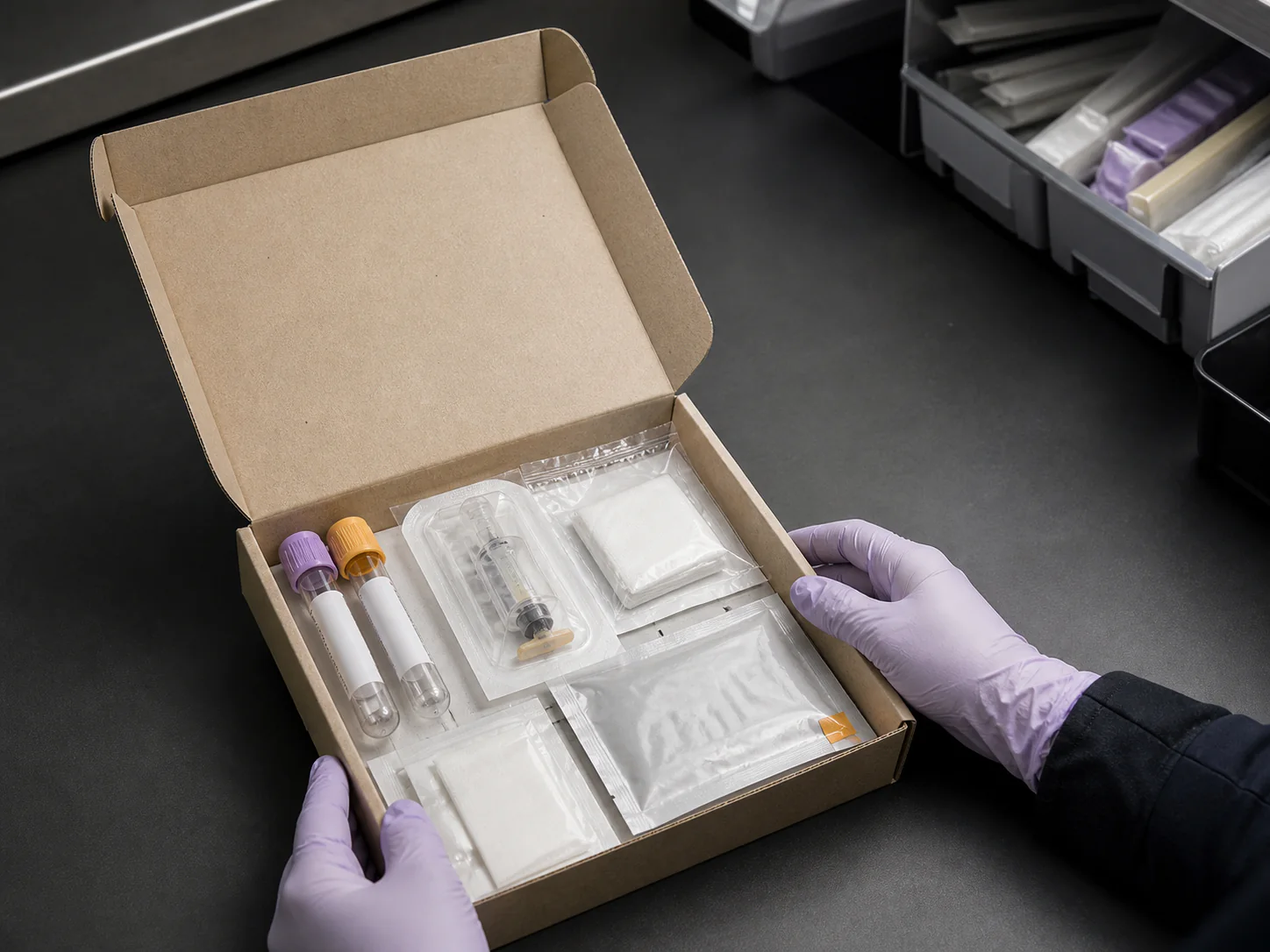
Collecting the sample
Getting it right the first time
A finger-prick collection is straightforward, but a handful of details decide whether your result is interpretable — and they are the details most often skipped.
Time of day
Before 10am for anything hormonal. Testosterone and cortisol follow a daily rhythm, and every reference range is built on morning samples.
Warm hands, good flow
Run your hands under warm water and let your arm hang down for a minute. The single biggest cause of an insufficient sample is a cold hand.
Post the same day
Samples are stable for the window the kit is validated for, but that window starts at collection. A tube that sits on the side until Monday is a wasted kit.
Cycle timing, where it applies
Female hormone panels ship with a timing guide. Oestradiol and progesterone are only interpretable on the right day of your cycle.
What you get back
A report, not a verdict
Every marker, in context
Each value plotted against its reference range, with a plain-English explanation of what it measures and why it is on the panel.
A PDF for your GP
Markers grouped by system, units and ranges alongside each value, and the laboratory's accreditation on the report. Formatted to be handed over.
A laboratory comment
On sample quality, and on anything markedly outside range that warrants booking an appointment rather than researching it online.
Your history, kept
Repeat panels sit alongside the earlier ones so you can see a trend. A single value is a point; three are information.
Questions
Before you order
Our blood tests measure and report biochemical markers. They are not a clinical diagnosis and do not replace medical advice. Results should be evaluated alongside your broader health context.
Pick your panel
If you are not sure which one answers your question, start with the library — it will tell you before you spend anything.
Blood tests and supplements only. We do not sell prescription medicines.